
What each hire handles
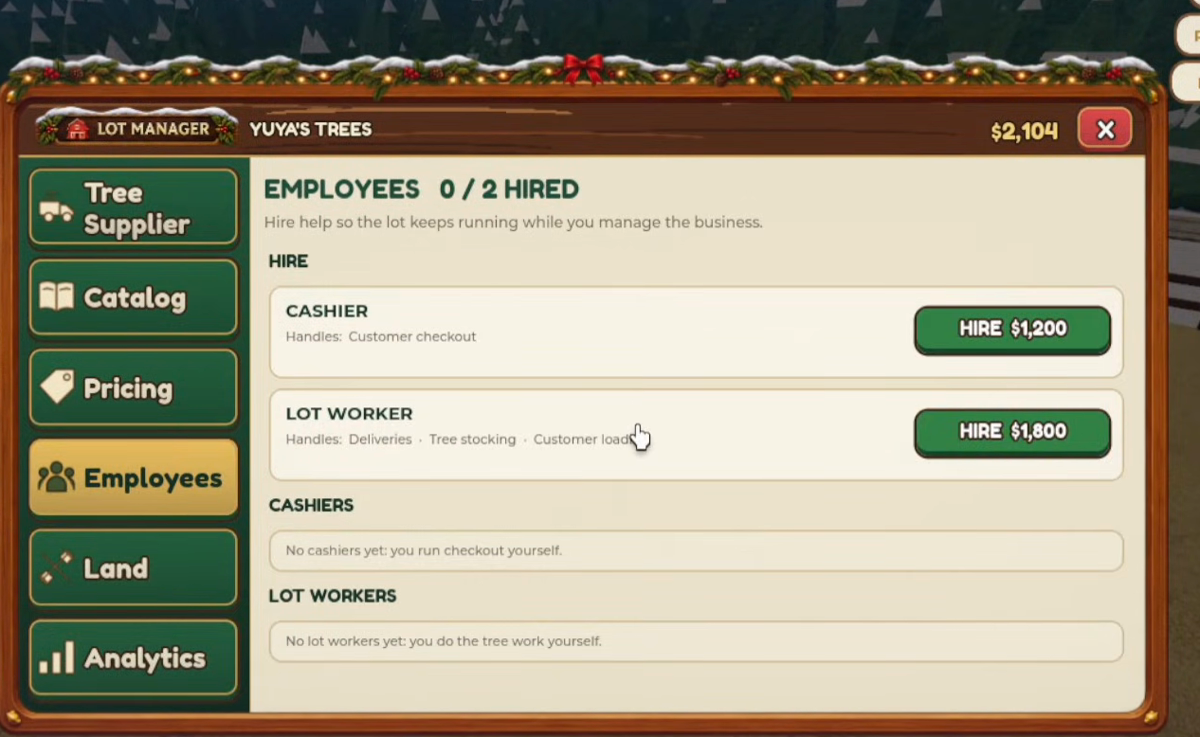
The panel names the job in one line under each title, and the wording is narrow. A cashier handles customer checkout. A lot worker handles deliveries, tree stocking and customer loading. That is the whole of the description the game gives you.
| Hire | Price | Handles |
|---|---|---|
| Cashier | $1,200 | Customer checkout |
| Lot worker | $1,800 | Deliveries · Tree stocking · Customer loading |
What the two hires cost
Both prices appear on the green button itself: HIRE $1,200 and HIRE $1,800. Each purchase filled one seat and the header count moved from 0/2 to 1/2 to 2/2.
Read them as one-off payments. No wage, upkeep or per-minute cost appeared anywhere in the panel, so any "the worker pays for itself in X minutes" arithmetic you see elsewhere is guessing at numbers the game has not shown.
How many you can hire
Two, until the HQ changes. When both seats fill, the buttons are replaced with TEAM FULL and the panel tells you to upgrade the HQ. The HQ panel lists 3 Employee Capacity among the things its next tier unlocks, so the third seat arrives with the building, not with cash.
That cap matters for planning: two seats means you can put one cashier and one lot worker on the lot at the same time. What you cannot do is hire a second cashier or a second lot worker until the HQ adds the third slot. Everything the two hires do not cover is still your job.
Which hire fixes your bottleneck
Pick by the symptom you can see, not by price.
Customers are queuing and you are stuck at the register. Buy the cashier. You are the checkout line right now, and the line stops growing revenue the moment it forms.
Trees sit in the crate, or a customer waits for a tree you have not moved. Buy the lot worker. Deliveries, stocking and loading are three jobs in one hire.
Neither queue exists and cash is short. Buy neither. Spend the $1,200 on the next crate instead, then revisit when a queue actually forms.
There is a fourth case worth naming: if your delivery capacity is already full, a new hire has nothing to do with the cash you are holding. Fix storage in Run a Christmas Tree Lot Upgrades first.
How many sales cover a hire
Divide the hire price by the profit on one tree. That gives the number of extra sales needed to earn the hire back — a payback in sales, not a claim about how much faster the worker is, because the panel never states a speed.
One worked example, using prices read on 15 November 2026. A medium Common tree costs $28 and you sell at $84, so profit is $56. The cashier at $1,200 is covered after 22 sales. The lot worker at $1,800 is covered after 33.
Run your own numbers in the Run a Christmas Tree Lot Profit Calculator before you commit the cash, and if you are still working out why cash is slow, Run a Christmas Tree Lot Money Guide starts from the three bottlenecks rather than the two hires.